
The Living Language of Animal Spirit Totems: Meaning, Practice, and Everyday Wisdom
Find Your Spirit Animal Guide
Start the TestUnderstanding the Landscape of Totemic Wisdom
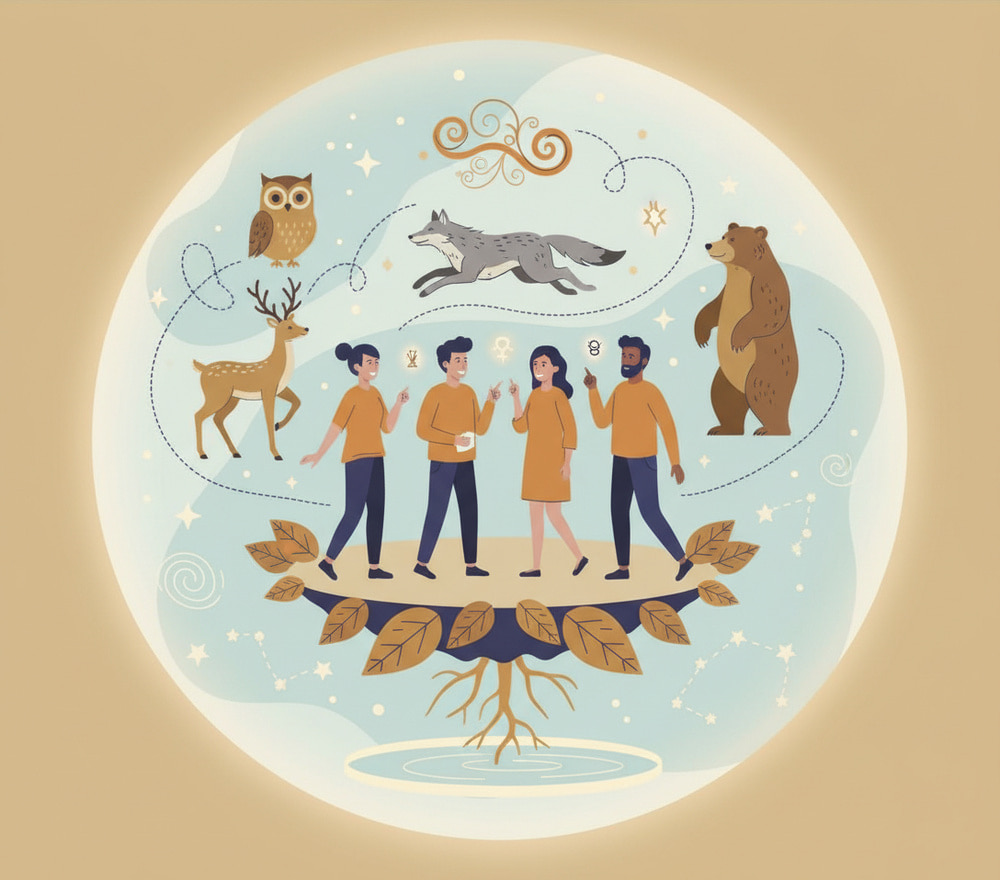
Across cultures, people have turned to the natural world for mirrors of character and destiny. Within that living mirror, practitioners speak of animal spirit totems as archetypes that anchor intuition and purpose. These archetypes act like signposts on a wilderness trail, pointing to qualities we already carry yet haven’t fully expressed. They encourage us to reclaim instinct, balance reason with sensation, and notice the subtle ways our environments shape choices. Because they are expressed through story and symbol, they travel gracefully across generations without losing their power to spark insight.
In plain terms, a totem can be understood as a relationship, not a possession, and the relationship evolves as you do. In everyday practice, a totem animal might highlight resilience during change or compassion during conflict, helping you translate raw experience into coherent action. Rather than offering rigid rules, these relationships suggest principles, nudging you toward congruence between values and behavior. Over time, small rituals and mindful attention stitch those principles into habits, and habits crystallize into identity. The process feels less like adopting a label and more like remembering a fluent, embodied language.
- Symbols work best when paired with consistent reflection and grounded action.
- Personal meaning matters more than any universal dictionary of traits.
- Seasonal cycles, dreams, and synchronicities often provide timely guidance.
Roots, Traditions, and Cross-Cultural Perspectives
Long before modern scholarship, communities worldwide wove animals into cosmology, ethics, and rites of passage. Scholars note that the phrase animal totem entered anthropological writing in the 18th century, yet lived traditions predate that vocabulary by millennia. Nations across North America, lineages throughout Africa, and clans in parts of Oceania formed kinship structures that honored reciprocal obligations among people, land, and other-than-human relatives. In these systems, stories encode responsibilities, seasonal knowledge, and ceremonial protocols, ensuring that wisdom remains portable and memorable.
Careful study asks us to distinguish living heritage from modern personal development methods while still honoring universal human longings for belonging and purpose. For modern seekers, a vow to act with integrity alongside, my totem, can function as a compact that elevates choices in love, work, and community. Respectful learning involves citing sources, supporting culture-bearers, and acknowledging that many teachings are not public. When approached humbly, contemporary practice can complement tradition by emphasizing service, ecological stewardship, and the cultivation of character through disciplined, heart-centered attention.
- Learn from primary voices and compensate teachers fairly.
- Differentiate private ceremony from open, public learning.
- Translate insight into service for people and place.
How to Identify Your Personal Ally
Discovery begins with noticing patterns, both obvious and subtle, across dreams, day-signs, and pivotal memories. As you keep a journal and tally recurring motifs, the phrase, my totem animal, shifts from abstraction to a felt relationship that breathes through daily moments. Track what energizes you, what calms you, and what calls you to act bravely when it would be easier to retreat. Because the psyche communicates in image and sensation, gentle curiosity often reveals more than forceful analysis. Let your observations simmer until they cohere naturally.
Embodiment practices add texture to insight, turning vague hunches into stable anchors you can trust. During meditation or walk-and-think sessions, the inquiry of how to honor, my animal totem, can be explored through breath-led visualization and slow, mindful movement. You might mirror postures, explore metaphor through drawing, or compose a small vow you can keep consistently. As the relationship matures, you will refine your listening, pruning distractions while watering signals that align with your values. Over weeks, a tapestry of impressions consolidates into clarity.
Structured methods help when intuition feels noisy or contradictory, especially in fast-paced seasons. When you want a reliable compass, a thoughtful animal totem guide can frame reflection without stealing your agency or flattening nuance. Use it as scaffolding, not a cage, and adapt prompts to your context, sensory preferences, and cultural considerations. Most importantly, test insights in the real world, where habits and consequences provide honest feedback. Practice, revise, and practice again until your choices echo the virtues you seek to embody.
- Keep a dream and sign log for at least one lunar cycle.
- Blend intuitive noticing with simple embodiment exercises.
- Create a small ritual to renew the relationship weekly.
Symbols, Meanings, and Practices at a Glance
Symbols feel powerful because they compress complex knowledge into images your nervous system understands quickly. In conversation, the plural phrase, spirit totem animals, offers a helpful shorthand for mapping patterns like kinship, patience, cunning, or sovereignty. While lists can never replace lived experience, concise summaries can prime your attention and make field notes far easier to interpret. Use summaries to spark inquiry, and then verify meaning through direct experience, ethical guidance, and a steady cadence of practice over time.
Because language shapes perception, some mentors choose terms carefully to foreground reciprocity and respect. Some teachers prefer the expression, totem spirit animals, to emphasize that guidance flows both ways and carries obligations along with benefits. A prompt that many journalers enjoy, such as “How did I find my totem animal during this season?”, can unlock memory and pattern recognition without turning mystery into dogma. With that spirit in mind, the compact reference below links archetypal themes to practical actions and reflective prompts that deepen learning.
| Archetype | Core Meaning | Everyday Anchor | Reflection Prompt |
|---|---|---|---|
| Eagle | Vision and high-level perspective | Weekly balcony view on your goals | Where does altitude reveal a simpler path? |
| Wolf | Kinship and disciplined collaboration | Clear roles and shared rituals with a team | How do I balance loyalty with honest feedback? |
| Bear | Rest, boundaries, and restorative courage | Guarded focus blocks for deep work | What will I protect so I can replenish fully? |
| Fox | Adaptive intelligence and timing | Practice graceful pivots under pressure | Where does wit open a kinder solution? |
| Deer | Gentleness paired with alert presence | Soft starts to hard conversations | How can tenderness amplify my courage? |
Use the table as a launchpad, not a verdict, and let your own data refine the sketch into a portrait. When traits resonate, translate them into micro-habits you can practice immediately, like a morning check-in or a weekly nature walk. You will learn faster by doing, especially when reflection and feedback accompany action. Over months, the symbolic threads will braid into a sturdy rope you can hold during storms, steadying both perception and performance.
Integrating Guidance Into Daily Life
Ethical integration turns insight into character by anchoring values in repeatable behaviors. Start small: one morning vow, one evening review, and a weekly ritual in a place that calms the mind while awakening the senses. For group work, circles sometimes host tracking games that help you, find your totem animals, through shared noticing, storytelling, and compassionate challenge. The key is to keep practices simple enough that you will actually do them, yet meaningful enough that they nourish attention rather than deplete it.
In relationships, totemic virtues become a shared language for appreciation and repair, allowing teams and families to name strengths without collapsing into stereotypes. In leadership, archetypal cues sharpen decision-making by clarifying which value should lead in a specific context. In creativity, symbols spark playful experimentation, reducing perfectionism by treating drafts like exploratory tracks in fresh snow. As the seasons turn, you will likely notice that the relationship matures alongside your capacity for listening, and that listening turns ordinary days into lucid, embodied learning.
- Translate traits into one habit per week and track adherence.
- Use nature-based rituals to reset attention and regulate stress.
- Invite feedback from trusted allies to calibrate blind spots.
FAQ: Practical Answers for Curious Seekers
How do I begin if I feel skeptical?
Start with observation and low-stakes experiments rather than belief claims. Give yourself a month to record patterns, then evaluate results like a scientist who honors both data and lived experience.
Can I work with more than one ally at a time?
Yes, but it helps to focus on one relationship per season so you can notice clear signals and avoid noise. Over time, layers of practice create a constellation that reflects your changing context.
What if my symbols conflict with someone else’s interpretations?
Personal meaning takes precedence as long as it is ethically grounded and tested through action. Dialogue with mentors and community, and treat published glossaries as helpful starting points rather than final verdicts.
How do birthdays and seasonal cycles influence practice?
Some lineages map time to symbolic wheels that offer seasonal lessons aligned with light and climate. In those frameworks, the inquiry, what is my birth totem animal, is explored through a specific calendar rather than generic lists.
What benefits can I expect in day-to-day life?
Clarity increases as you align values with micro-habits, and resilience grows as rituals regulate energy and attention. Many people also report kinder self-talk, steadier boundaries, and more purposeful collaboration.